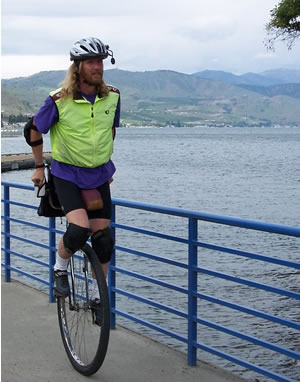
Post from Dave Glesne:
Author of "Understanding Homosexuality."
Dear Lars,
I can only imagine how time-consuming and energy draining the last weeks have been as you embraced the cause there in your own community. I’m glad for your sake that there finally appears to be some breathing room for you.
As you mentioned in your recent post, I suggested that we are perhaps at a natural ending point in our conversation. As we were going back and forth over those many weeks, I asked myself what would be indications as to when we would reach that point. My thought was that when we (and maybe even more so our readers) began repeating ourselves it may be an indication that this particular aspect of the conversation has run its course. I was sensing that we were beginning to go over the same ground. I say that fully believing that such conversations should never really end.
I too want to thank you for the respectful conversation we have had. I choose the word “respectful” very carefully and with gratitude. I hope we have modeled for others the kind of dialogue that is needed in discussions such as these. In such a conversation iron sharpens iron and I am grateful for that process we have been through together.
I agree with you that at the end of the day the conversation comes down to one of worldviews, presuppositions, and following through logically and consistently from those starting points. You summarized in your post where you are at currently. Permit me to do the same by way of summary.
The presupposition that I start with is that God exists. I believe that this God is a Personal God who has a moral character and that he has communicated to human beings made in his image, truth about himself and his character and about us human beings. I believe this God is love and holy at the same time, and that is why love and Law can never finally be separated from one another. I understand God’s 10 commandments (moral law) to flow out of his moral character not only to show us we are sinners (negative use) so that we can turn to Christ for forgiveness, but also to reveal his will for our lives (positive use) in what makes for the fullness of life. They are the way of freedom which God deeply desires for all his children. I believe God sets me free in Christ from the curse of the law to love Christ above all else. Then in any given situation I walk into, I can ask, “What do I do with regard to my neighbor to demonstrate my love for Christ?” I believe my love for Christ is demonstrated by being obedient to his commandments. I believe that is what Jesus meant when he said, “If you love me you will obey my commandments”. God’s law then becomes the law of liberty. No wonder the Apostle Paul could say, “I delight in the law of the Lord.”
With regard to the sexual behavior of my same-sex neighbor, (as with the pre-marital and extra marital sexual behavior of my heterosexual neighbor), love for my same-sex neighbor - both inside and outside the church - does not allow me to say “yes” to what God has said “no”. For both my homosexual and heterosexual neighbor the call is rather to deny self, take up one’s cross, and follow Christ. The cross, death to self and things, is not the easy road, but it is the road to life.
I would take issue with “Theologians such as Spong, Wink, and many others have made the biblical case for full equality.” I would argue that the revisionist scholars have not made the case biblically. The claim that the Bible is opposed only to particularly exploitative forms of homosexual practice – such as pederasty, coercive sex with slaves, or solicitation of prostitutes – is generally made in ignorance of the arguments that suggest Scripture’s opposition - without exception - to homosexual practice. Even Walter Wink who is supportive of homosexual unions, acknowledges, for example, that Paul’s indictment is not limited to particularly exploitative instances of same-sex intercourse. He says the Bible is negative toward same-sex behavior, and “there is no getting around it.” He simply believes the Bible is wrong on this issue.
Our conversation for good or ill has revolved primarily around 4 pages (in chapter 3) of my 185 page book, Understanding Homosexuality. The great majority of the book deals with the biblical argument and then a call for pastoral care of the church with same-sex persons. For those within the church who hold to at least some semblance of the authority of Scripture, the bulk of the discussion will center on the arguments from Scripture. The moral question can only be answered from God’s Word – not science. However, when communicating with those outside the church who do not believe the Scriptures, the discussion will be in the arena of creation and science. In these differing communications, we are simply following Paul’s example in the Book of Acts where when speaking to the Jews, he always argued out of the Scriptures because it was a common authority, but when he spoke to the Gentiles he never argued from out of the Scriptures, but always started rather with creation – something common to both. It does no good to argue out of the Scriptures with one who does not believe the Scriptures. But the things of creation and science, the structures of the human body, diseases, etc. is a common experience for all human beings – believer as well as unbeliever.
Thank you, Lars, for providing the forum to exchange ideas and inviting me into this discussion. My respect for you as a person has grown throughout the conversation while at the same time I have found myself not agreeing with certain views and ideas. That is a positive for which I am thankful.
Sincerely,
Dave
Wednesday, February 21, 2007


Thursday, February 15, 2007
Is This It?
Dear Dave,
I hope this finds you well. Sorry for the long delay in writing. Spending time trying to keep the world’s most powerful corporation from becoming the dominant player in our community has taken a lot of energy. But now a public amendment process is underway in our city and Wal-Mart has permission to remain open in the meantime, so I can return to other interests.
During this past month you wrote and suggested we may have reached a natural ending point for our conversation. Perhaps you are right. Although I could easily be enticed back into this conversation, it may be a better use of time to compile our blogs and reader comments and create an e-book or maybe even a few printed books of our conversation. Maybe after I compile all the words we’d find that we each have some more to say in concluding remarks.
One of the pieces I’ve grown to appreciate about our conversation is that we’ve actually had a conversation. During this past Wal-Mart month our community went on the kind of high-energy emotional rampage that reminded me too much of the diatribes that fly around in the debate over whether men can love men and women can love women. I have a better appreciation now for those who stand up for causes. I ended up being called a development terrorist, and despite our winning the case in court, our city officials asserted that we’d “fabricated” our case. And then, to bring everything full circle, one of the Wal-Mart advocates read our blog conversation and has been trying to save my soul from damnation ever since. He keeps asking me, “Who is Jesus?” My answers do not satisfy him.
Funny to have been the brunt of so much emotion this past month, especially when I’m generally an advocate of emotion. Funny to have taken recourse in the law against Wal-Mart when I’m generally an advocate of experience first, then law.
I do think our conversation has come down to which tent we choose to live in (experience first or law first) or which side of the river we choose to live upon, and whatever other metaphors we’ve tried to share our stories to each other with. I used to be more frustrated that I couldn’t figure out ways to entice people from one side of the river to the other. In more recent years I’ve come to appreciate that our world probably benefits from a spectrum of worldviews. I even imagine that the evolution of our species has benefited from this spectrum. After all, what is a center without an edge, or an edge without a center?
I continue to lament, though, the damage that is caused by the center’s slow adaptation to new realities. Despite your statements separating LGBT questions from women’s rights and civil rights, I continue to believe that the march toward LGBT equality is in line with the march of women, of civil rights, and the other movement in the long historical tide of justice for all. I continue to believe that Christianity and society are best served by full inclusion rather than by labeling sexually active same sex relationships as sinful.
I do not know the length of the journey toward full justice, but many strides have been made. States such as Vermont, Massachusetts, and Connecticut have led the way. Churches such as the UCC and the Episcopal church have stepped up to full equality. Theologians such as Spong, Wink, and many others have made the biblical case for full equality. Leaders such as Nobel Prize Winning Bishop Desmond Tutu are outspoken advocates for full equality. Even our slow and deliberative Evangelical Lutheran Church in America made strides last week when the trial of gay pastor Bradley Schmeling resulted in a call for the church to change its rules and allow him to serve as a pastor and to continue in his committed relationship with his partner.
I’m encouraged by all these things, and I’m encouraged by our conversation. I noted in the beginning of our dialogue that the words of your book concerned me greatly, that a book titled Understanding Homosexuality, and subtitled Perspectives for the Local Church came across to me more as a caricature of gay people than an accurate description of the many church-going and secular gay people I have come to know. I appreciate you writing that such labeling was not your intent. I remain concerned that many people who read your book will perceive it in the same stereotyping way that I and others have. I believe that the way forward is for all of us to keep talking. After our Wal-Mart month I realize anew how much energy it takes to keep adding words to a conversation, and trusting the mysterious process of living in the communities we are part of. To all who keep speaking into our communities, year after year after year, my respect continues to grow.
David, thank you. I know you have been busy during these writings, yet you’ve found time for sharing much with us. I’ll put this up as a post. We’ll see if any are still checking in to read and offer remarks. Maybe you’ll have a response to this. Maybe we’ll have a few more back and forths. I’ll try and compile our blog posts and see what evolves from that process.
Blessings to you and to all,
Lars
I hope this finds you well. Sorry for the long delay in writing. Spending time trying to keep the world’s most powerful corporation from becoming the dominant player in our community has taken a lot of energy. But now a public amendment process is underway in our city and Wal-Mart has permission to remain open in the meantime, so I can return to other interests.
During this past month you wrote and suggested we may have reached a natural ending point for our conversation. Perhaps you are right. Although I could easily be enticed back into this conversation, it may be a better use of time to compile our blogs and reader comments and create an e-book or maybe even a few printed books of our conversation. Maybe after I compile all the words we’d find that we each have some more to say in concluding remarks.
One of the pieces I’ve grown to appreciate about our conversation is that we’ve actually had a conversation. During this past Wal-Mart month our community went on the kind of high-energy emotional rampage that reminded me too much of the diatribes that fly around in the debate over whether men can love men and women can love women. I have a better appreciation now for those who stand up for causes. I ended up being called a development terrorist, and despite our winning the case in court, our city officials asserted that we’d “fabricated” our case. And then, to bring everything full circle, one of the Wal-Mart advocates read our blog conversation and has been trying to save my soul from damnation ever since. He keeps asking me, “Who is Jesus?” My answers do not satisfy him.
Funny to have been the brunt of so much emotion this past month, especially when I’m generally an advocate of emotion. Funny to have taken recourse in the law against Wal-Mart when I’m generally an advocate of experience first, then law.
I do think our conversation has come down to which tent we choose to live in (experience first or law first) or which side of the river we choose to live upon, and whatever other metaphors we’ve tried to share our stories to each other with. I used to be more frustrated that I couldn’t figure out ways to entice people from one side of the river to the other. In more recent years I’ve come to appreciate that our world probably benefits from a spectrum of worldviews. I even imagine that the evolution of our species has benefited from this spectrum. After all, what is a center without an edge, or an edge without a center?
I continue to lament, though, the damage that is caused by the center’s slow adaptation to new realities. Despite your statements separating LGBT questions from women’s rights and civil rights, I continue to believe that the march toward LGBT equality is in line with the march of women, of civil rights, and the other movement in the long historical tide of justice for all. I continue to believe that Christianity and society are best served by full inclusion rather than by labeling sexually active same sex relationships as sinful.
I do not know the length of the journey toward full justice, but many strides have been made. States such as Vermont, Massachusetts, and Connecticut have led the way. Churches such as the UCC and the Episcopal church have stepped up to full equality. Theologians such as Spong, Wink, and many others have made the biblical case for full equality. Leaders such as Nobel Prize Winning Bishop Desmond Tutu are outspoken advocates for full equality. Even our slow and deliberative Evangelical Lutheran Church in America made strides last week when the trial of gay pastor Bradley Schmeling resulted in a call for the church to change its rules and allow him to serve as a pastor and to continue in his committed relationship with his partner.
I’m encouraged by all these things, and I’m encouraged by our conversation. I noted in the beginning of our dialogue that the words of your book concerned me greatly, that a book titled Understanding Homosexuality, and subtitled Perspectives for the Local Church came across to me more as a caricature of gay people than an accurate description of the many church-going and secular gay people I have come to know. I appreciate you writing that such labeling was not your intent. I remain concerned that many people who read your book will perceive it in the same stereotyping way that I and others have. I believe that the way forward is for all of us to keep talking. After our Wal-Mart month I realize anew how much energy it takes to keep adding words to a conversation, and trusting the mysterious process of living in the communities we are part of. To all who keep speaking into our communities, year after year after year, my respect continues to grow.
David, thank you. I know you have been busy during these writings, yet you’ve found time for sharing much with us. I’ll put this up as a post. We’ll see if any are still checking in to read and offer remarks. Maybe you’ll have a response to this. Maybe we’ll have a few more back and forths. I’ll try and compile our blog posts and see what evolves from that process.
Blessings to you and to all,
Lars
Thursday, January 11, 2007
A Try at a Post
Dear Dave,
On December 29th, I was part of a winning petition to prevent Wal-Mart from opening the 162,000 sq. ft. building that they put in a development where the maximum allowable building size is 50,000 sq. ft. Since then there’s been high emotion and a lot of explaining to do here in Chelan (www.dontboxchelan.com). I don’t know how you and others react, but when overload situations like this come for me I find it hard to keep track of time, events, and commitments. I have to keep looking at a calendar to try and avoid missing even the simple things. I know that the lawyers are back in court next Tuesday. Which is to confess, this note may make less sense than it might otherwise.
Thank you for taking the time to respond to our readers. There are more comments again. I’ll note two areas.
1.
….. In fact, Dave, I’m sitting here trying to put this post together and I’m realizing I can’t give it sufficient attention right now. The words and the thoughts are not meeting this morning. I’ll get back to you as soon as possible. Hopefully within a few days.
Lars
On December 29th, I was part of a winning petition to prevent Wal-Mart from opening the 162,000 sq. ft. building that they put in a development where the maximum allowable building size is 50,000 sq. ft. Since then there’s been high emotion and a lot of explaining to do here in Chelan (www.dontboxchelan.com). I don’t know how you and others react, but when overload situations like this come for me I find it hard to keep track of time, events, and commitments. I have to keep looking at a calendar to try and avoid missing even the simple things. I know that the lawyers are back in court next Tuesday. Which is to confess, this note may make less sense than it might otherwise.
Thank you for taking the time to respond to our readers. There are more comments again. I’ll note two areas.
1.
….. In fact, Dave, I’m sitting here trying to put this post together and I’m realizing I can’t give it sufficient attention right now. The words and the thoughts are not meeting this morning. I’ll get back to you as soon as possible. Hopefully within a few days.
Lars
Friday, January 05, 2007
Dave Glesne responds to readers
Post #22: A continuing discussion between pastor/author Dave Glesne (Understanding Homosexuality) and pastor/author Lars Clausen (Straight Into Gay America)
Dear Lars,
A Happy New Year to you! We enjoyed Christmas with two of our children home with us and a trip to northern Minnesota to visit family there. Between Christmas and New Years I took a week of vacation. However, when one does not leave town for vacation, one runs the risk of being called on for deaths and funerals and that week we had four deaths and three funeral!. So I’m really not feeling as though I had much of a vacation.
But life goes on and I need to respond to your latest post. You invite me to respond to some of our readers and their concerns. What I will do is respond first with some thoughts from your most recent post and then look at some of the comments by our readers to my Tuesday, December 19 post.
Robert Spitzer’s Data & Reparative therapy
You commented on reparative therapy and Spitzer’s data in your latest post. Perhaps you and our readers will note that in our conversation, I have neither used the term reparative therapy nor have I advocated for it. One reason is, I don’t like the term. Repair a person? In my mind, that is not good or helpful language. A few years ago, I was present in a conversation which included Dr. Warren Throckmorton and another Christian psychologist in Minneapolis and remember both of them saying that they did not like nor use that term.
Is there evidence that same-sex persons can and have indeed changed? I believe the answer to that question is “yes.” On pages 28-33 of Understanding Homosexuality I address this matter and give evidence from biblical teaching, from scientific studies, and from human experience that homosexual persons can and have changed. It is within this section that I speak of Robert Spitzer’s testimony that some same-sex persons can and do change. As to Spitzer’s added comments that the “likelihood of altering sexual orientation is probably rare” I am not at all surprised. Those who carefully read the book and this section of the book in particular will note that I am very careful to be a realist here. I acknowledge “the limits and problems” (page 30) of change, that change is not easy and there are varying degrees of change (page 30), that it is very unlikely that one for whom same-sex impulses run deep within their being and who are in any way pressured into treatment will benefit (page 30). I say that for the one who wants to move away from the orientation “change may and probably will be a long, difficult and painful challenge.” (pages 31-32)
Outside the Christian context, I would suspect that Spitzer is right – that change is probably rare. Within the Christian context, it is undoubtedly just as difficult. I cite that ministries which find that individuals who are being successful in their attempts at sexual reorientation, or at least sexual control, seem to hold three values in common: 1) a strong, unswerving commitment to Jesus Christ, 2) the establishment of a long-term relationship with a professional therapist, and 3) an accepting environment in which progress and healing toward sexual wholeness can be made.
A conversation over lunch a few weeks back with a friend who lived as a lesbian for 14 years but who is no longer living as such, confirmed again for me the difficulty such a one has in moving out of the lifestyle. There is a lot of pain involved. A woman in the congregation I serve, with the help of a loving Christian community and a ministry of inner healing, has struggled but has successfully left her lesbian life of 10 years and is now experiencing a different reality. The testimony of an ex-gay man who now is married to a good friend of my daughter bears witness also to the difficulty but success in moving away from the homosexual life.
For those interested, a documentary by Dr. Warren Throckmorton entitled “I Do Exist” might be helpful. From this website: “This documentary looks into the lives of five people who struggle with being attracted to those of the same sex and addresses many contemporary questions surrounding the issue of change. I Do Exist describes individual perspectives regarding the development of same sex attractions. Participants describe their journey thus far in living in accord with their personal values and beliefs. Those who tell their experiences on I Do Exist describe changing perspectives on their sexual identity and personal beliefs.”
Change is difficult, painful, and in Spitzer’s words probably rare, but the testimony of an increasing number of persons who are exiting the same-sex life are telling us it is not impossible.
Trivializing the experience of same-sex persons
Dan asks me how the Law causes me huge damage and rather believes that if I am honest, would acknowledge that it “rather provides me with a great deal of comfort and direction, that it provides me with self-discipline and fulfillment.” I would respond by saying that the Law has both effects on me.
When I state that the Law causes me and all people huge damage, I am speaking – in classical Lutheran usage – of the first use of the Law. The Law’s first and primary use by God in my life is to show me that I am a sinner. I am guilty before a holy God. In this way the Law kills me and shows me that I am spiritually dead apart from Christ. It kills my pride. It is in this sense that I say it causes me huge damage. Since we all are sinners and fall short of the glory of God, as sinners we are all equally damaged or killed by the Law. Why does the Law does this work on us? So that I find no hope in myself and am then open to help from outside myself. As Luther says, the Law is my schoolmaster that drives me to Christ. And it is a relentless task master as it whips me mercilessly as it drives me to Christ. If the Law did not do this work in me, I would not see my need for Christ and if I did not see my need for Christ, I would not turn to him for salvation and if I don’t have salvation I am lost. So even in this strange work of the Law it is good, for it points me to the need for a Savior. Heterosexual, homosexual, bi-sexual, Trans gendered, etc. – all of us without exception stand in the same place under the Law – condemned and guilty and in need of a Savior.
The second use of the Law has to do with ordering society. And the third use of the Law (disputed by some) has to do with the living of the Christian life. It is this sense that I believe Dan speaks of, that once one is in Christ, obedience to the Law is the road to remaining free and not falling back into bondage to sin. What Dan says about the Law giving me comfort and direction, etc. would be quite true when understood in this third use of the Law. I speak of this use of the Law on pages 161-162 when I say that after rescuing His people Israel from bondage in Egypt, God gave them the 10 Commandments. Why? Because God wanted his children to remain free. So too we have been rescued by Christ from bondage to Sin and he gives us the Law of love, the moral law so that by living a life of obedience to that law, we might remain free and not return to slavery to sin. Disobedience to God’s Law returns us to bondage and slavery, and eventual death. Obedience to the Law brings us freedom. No wonder Paul could say, “I delight in the law of the Lord!” for it is the law of freedom.
Dan also asserts (as well as other readers) that my entire approach trivializes the experiences of same-sex people. I do not believe that anyone who reads my book carefully can honestly come to that conclusion (and I realize that perhaps Dan has not read the book). As my book indicates time and again, I am well aware of the tremendous pain and hurt and confusion etc. experienced by same-sex persons and I do not underestimate the depth of the pain. I am going to take the liberty to quote sections of my book that speak to the issues Dan raises in his comment:
Loving God? and Data
Nadine asks a question regarding Jesus’ words, “If you love me, you will obey my commandments?” She wonders if I am implying that GLBTIQA people do not love God if they do not follow my views of God’s commands. First, it needs to be said, that my views are not at issue here. What one is faced with are Jesus’ words about obeying his commandments. If we take Jesus straightforwardly here and in the normal meaning of words, it seems to me Jesus is saying that when we obey his commandments, we are expressing love for him and if we are not obeying his commandments, we are not expressing love for him. In other words, when I am disobedient to Jesus’ commands (which is far too often in my case) in those instances I am not loving Christ. That is why I confessed to Ronald (in the Prologue of my book) individually and why I confess corporately on Sundays with other believers that I do not love God as I ought – and I ask for forgiveness. Yes, as with myself, I do believe that GLBTIQA people who are disobedient to Jesus’ commandments likewise are in those instances not loving Christ. I see no biblical grounds to say something different with regard to GLBTIQA people than all other persons.
Nadine also comments on my use of data: “Rev. Glesne is saying give us better data or he’ll use what he has. BAD DATA IS NOT WORTH USING.” Then I appreciate her next comment – question: “If data is collected to find out about risky behavior to try to address that risky behavior, how can you then use that data to describe the entire group?” I feel as thought I have been heard here. Thank you, Nadine. There is only one purpose for bringing to light the risky nature of same-sex behavior, and it is not to demean people, or to make them feel bad, or to cause them hurt or pain, or to degrade people. I find no delight in directing attention to these behaviors. The purpose for doing so is to point out the health risks of such behavior in the hope that people will make different choices in their behavior. In my mind, that is expressing love for my neighbor, for love desires the good of the neighbor and there is same-sex behavior that is not good for one’s health.
Let me use anal intercourse of gay men as an example. The rectum was not built for intercourse. When that occurs, the rectal mucosa is torn and, in many cases, the sphincter muscles are stretched with can lead to fecal incontinence. It is not a healthy activity because tears in the rectal mucosa result in such a high incidence of disease. Now I suppose one can simply deny that this takes place. To me that is turning a blind eye. I am rather persuaded that this is what can happen. It is a risk of the activity. I would go on to say that it is a risk of the entire group of gay men who engage in such activity. (Yes, yes, heterosexuals who engage in such behavior run the same risk.) But while I can describe this activity as risky for the entire group, do all individuals within that group end up with some disease? I don’t know, but I would guess not – happily. All people who smoke cigarettes engage is risky behavior health-wise. Does that mean they all die of lung cancer? Again, happily not! I think, however, it is legitimate to speak of the risky behavior and activity of an entire group while acknowledging that not all individuals within the group will experience the results of the risky activity.
Regarding bad data is not worth using. I don’t think it is going to move the discussion forward by going over this ground yet one more time. At face value, who could really disagree with that statement? But unfortunately it is not quite that easy in my mind. Is it indeed bad data? How does one know it is in fact bad? How bad is it? If we are back to talking about Cameron and Jay & Young’s studies, I have responded to the concerns. If newer studies have been done on the kinds of behaviors and frequency of those behaviors in the gay subculture (so we are comparing apples with apples), then they can be brought forth and we can all look at these studies and evaluate them. If they are deemed better and more accurate than Cameron and Jay & Young’s, then we have improved statistics that we all welcome and are looking for.
Discredited Sources, Data, and Studies
Tim Fisher strongly criticizes the data put forward by Dr. Stanley Monteith (Paul Cameron) and the Gay Report by Jay & Young as junk science. We have gone over this ground before so I’ll only reiterate some central points. If the criticism is that these two studies are not representative of the overall population, it is a misrepresentation of what I am saying because I am making no such claim. These are studies done in what I refer to as the gay subculture and are not meant to be representative of the gay population as a whole. As such I doubt that the kinds of behavior are being denied (I may be wrong) and the percentages are always open to better data. What I have been missing from Tim and others is the bringing forth of scientific studies of the gay subculture that can then be brought along side the studies by Cameron and Jay & Young to challenge or confirm their reliability. I have always said we are open to better and improved data if further studies so warrant.
To answer Tim’s question of whether I have read all that he has written, the answer is “yes.” To refresh my thoughts, I just went back and quickly read over all the correspondence I have had with Tim (I hope I did not miss any, but that is a possibility). What I find is an impressive litany by Tim and many people of criticism of Cameron’s work and the conclusion that his work has been totally discredited. The line of thinking then follows that because Cameron’s work has been so totally discredited, therefore, the specific study I refer to in my book (the only reference made in the book to any of Cameron’s work – through Monteith) and which is in line with Jay & Young’s work is equally discredited – which may not be the case. What I do not find are studies of the gay subculture being brought to the table. Not to belabor the point, but let’s bring forth other studies of the gay subculture to see if these conclusions are confirmed or need to be modified.
NARTH Reference – Discrediting Science – Sexual Orientation – Holiness Code
Dr. Chapman is surprised that I once again use a Narth reference - and I am assuming he is speaking of referencing the Cummings article on the NARTH website on the Tuesday, December 19 post. I don’t believe you can be saying this but is the article by Dr. Cummings less credible if referenced and read on the NARTH website over against another website where it could be located – like Throckmorton’s for example? You undoubtedly realize the article is not a Narth writing, but a writing by Cummings that is made available for reading on their website. You have been respectful of me and I in turn want to be respectful of you. So please read this in the spirit in which it is written: dumb me for pointing eyes to the NARTH website rather than another one.
Dr. Chapman speaks of evangelical Christianity spending a lot of time discrediting science. My response is that when evangelical Christianity does so it needs to be criticized. There is no reason why evangelical Christianity should be criticizing science. Modern science grew up within a Christian context, it was birthed within that context, for Christianity provided the view of God creating an orderly cause and effect world outside of Himself which gave confidence that if one started an experiment today it could be continued tomorrow. Modern science arose in the West and not in the East for very good reasons. Speaking for myself, then, I am on the side of science. There is an objective world out there and we have the adventure of exploring that world through science. Now naturalistic science is a different issue, that is, science that is done within a view of the uniformity of causes in a closed system. But … that would be a different discussion which we cannot have here.
I am glad to know that you have not read my book (that didn’t quite sound right, but you know what I mean) because if you had done so, you would not have misrepresented what I am saying when you say that I do not believe homosexual orientation exists. I acknowledge the reality of homosexual orientation throughout the entire book. I make it very clear that I do not believe the great majority of same-sex persons choose their sexual orientation. Individuals choose their sexual behavior, but they do not choose their sexual orientation.
Dr. Chapman asks of me two specific questions: First, why is lesbianism never mentioned in the Old Testament? I am not sure. Robert Gagnon has much deeper study than myself and so I’ll share here what he says in this regard. He too is not sure but offers these possibilities (The Bible and Homosexual Practice, pages 144-145): “The primacy of penetration for defining sexual intercourse may partly explain why the Holiness Code leaves out lesbian relationships….It may have been thought of as a transgression of the covenant but one meriting a punishment less severe than death….Possibly lesbianism was unknown to the Israelites and/or Canaanites (it goes unmentioned in other legal materials from the ancient Near East) so there was no need to legislate it out of existence. We hear of male homosexual cult prostitutes in ancient Israel but not female homosexual cult prostitutes. In a society dominated by men and with a high view of chastity it might have been impossible for a sustained lesbian relationship to develop….In the end one cannot know what the precise reason for its exclusion from Lev. 18:22; 20:13 was.”
Second, why are the only two Old Testament references to male-male sex found in the Purity Code? Perhaps the primacy of the Holiness Code in the life of Israel gives us a hint at why it is found here and not elsewhere. God’s people in the land of Canaan were to be distinctively holy with respect to other peoples. The Holiness Code (Leviticus 17-26) was a law code which urged all Israelites to keep the land unpolluted through holy obedience to the commands. It was to govern and regulate the behavior of God’s people. So in addition to the 10 Commandments and specifically Commandment 6 which speaks directly and indirectly to all the issues and behaviors of human sexuality, the Holiness Code reiterates God’s moral code as well as speaking of civil and ceremonial laws of Israel.
Thank you to all the readers that have been with Lars and me on this journey.
Blessings,
Dave
Dear Lars,
A Happy New Year to you! We enjoyed Christmas with two of our children home with us and a trip to northern Minnesota to visit family there. Between Christmas and New Years I took a week of vacation. However, when one does not leave town for vacation, one runs the risk of being called on for deaths and funerals and that week we had four deaths and three funeral!. So I’m really not feeling as though I had much of a vacation.
But life goes on and I need to respond to your latest post. You invite me to respond to some of our readers and their concerns. What I will do is respond first with some thoughts from your most recent post and then look at some of the comments by our readers to my Tuesday, December 19 post.
Robert Spitzer’s Data & Reparative therapy
You commented on reparative therapy and Spitzer’s data in your latest post. Perhaps you and our readers will note that in our conversation, I have neither used the term reparative therapy nor have I advocated for it. One reason is, I don’t like the term. Repair a person? In my mind, that is not good or helpful language. A few years ago, I was present in a conversation which included Dr. Warren Throckmorton and another Christian psychologist in Minneapolis and remember both of them saying that they did not like nor use that term.
Is there evidence that same-sex persons can and have indeed changed? I believe the answer to that question is “yes.” On pages 28-33 of Understanding Homosexuality I address this matter and give evidence from biblical teaching, from scientific studies, and from human experience that homosexual persons can and have changed. It is within this section that I speak of Robert Spitzer’s testimony that some same-sex persons can and do change. As to Spitzer’s added comments that the “likelihood of altering sexual orientation is probably rare” I am not at all surprised. Those who carefully read the book and this section of the book in particular will note that I am very careful to be a realist here. I acknowledge “the limits and problems” (page 30) of change, that change is not easy and there are varying degrees of change (page 30), that it is very unlikely that one for whom same-sex impulses run deep within their being and who are in any way pressured into treatment will benefit (page 30). I say that for the one who wants to move away from the orientation “change may and probably will be a long, difficult and painful challenge.” (pages 31-32)
Outside the Christian context, I would suspect that Spitzer is right – that change is probably rare. Within the Christian context, it is undoubtedly just as difficult. I cite that ministries which find that individuals who are being successful in their attempts at sexual reorientation, or at least sexual control, seem to hold three values in common: 1) a strong, unswerving commitment to Jesus Christ, 2) the establishment of a long-term relationship with a professional therapist, and 3) an accepting environment in which progress and healing toward sexual wholeness can be made.
A conversation over lunch a few weeks back with a friend who lived as a lesbian for 14 years but who is no longer living as such, confirmed again for me the difficulty such a one has in moving out of the lifestyle. There is a lot of pain involved. A woman in the congregation I serve, with the help of a loving Christian community and a ministry of inner healing, has struggled but has successfully left her lesbian life of 10 years and is now experiencing a different reality. The testimony of an ex-gay man who now is married to a good friend of my daughter bears witness also to the difficulty but success in moving away from the homosexual life.
For those interested, a documentary by Dr. Warren Throckmorton entitled “I Do Exist” might be helpful. From this website: “This documentary looks into the lives of five people who struggle with being attracted to those of the same sex and addresses many contemporary questions surrounding the issue of change. I Do Exist describes individual perspectives regarding the development of same sex attractions. Participants describe their journey thus far in living in accord with their personal values and beliefs. Those who tell their experiences on I Do Exist describe changing perspectives on their sexual identity and personal beliefs.”
Change is difficult, painful, and in Spitzer’s words probably rare, but the testimony of an increasing number of persons who are exiting the same-sex life are telling us it is not impossible.
Trivializing the experience of same-sex persons
Dan asks me how the Law causes me huge damage and rather believes that if I am honest, would acknowledge that it “rather provides me with a great deal of comfort and direction, that it provides me with self-discipline and fulfillment.” I would respond by saying that the Law has both effects on me.
When I state that the Law causes me and all people huge damage, I am speaking – in classical Lutheran usage – of the first use of the Law. The Law’s first and primary use by God in my life is to show me that I am a sinner. I am guilty before a holy God. In this way the Law kills me and shows me that I am spiritually dead apart from Christ. It kills my pride. It is in this sense that I say it causes me huge damage. Since we all are sinners and fall short of the glory of God, as sinners we are all equally damaged or killed by the Law. Why does the Law does this work on us? So that I find no hope in myself and am then open to help from outside myself. As Luther says, the Law is my schoolmaster that drives me to Christ. And it is a relentless task master as it whips me mercilessly as it drives me to Christ. If the Law did not do this work in me, I would not see my need for Christ and if I did not see my need for Christ, I would not turn to him for salvation and if I don’t have salvation I am lost. So even in this strange work of the Law it is good, for it points me to the need for a Savior. Heterosexual, homosexual, bi-sexual, Trans gendered, etc. – all of us without exception stand in the same place under the Law – condemned and guilty and in need of a Savior.
The second use of the Law has to do with ordering society. And the third use of the Law (disputed by some) has to do with the living of the Christian life. It is this sense that I believe Dan speaks of, that once one is in Christ, obedience to the Law is the road to remaining free and not falling back into bondage to sin. What Dan says about the Law giving me comfort and direction, etc. would be quite true when understood in this third use of the Law. I speak of this use of the Law on pages 161-162 when I say that after rescuing His people Israel from bondage in Egypt, God gave them the 10 Commandments. Why? Because God wanted his children to remain free. So too we have been rescued by Christ from bondage to Sin and he gives us the Law of love, the moral law so that by living a life of obedience to that law, we might remain free and not return to slavery to sin. Disobedience to God’s Law returns us to bondage and slavery, and eventual death. Obedience to the Law brings us freedom. No wonder Paul could say, “I delight in the law of the Lord!” for it is the law of freedom.
Dan also asserts (as well as other readers) that my entire approach trivializes the experiences of same-sex people. I do not believe that anyone who reads my book carefully can honestly come to that conclusion (and I realize that perhaps Dan has not read the book). As my book indicates time and again, I am well aware of the tremendous pain and hurt and confusion etc. experienced by same-sex persons and I do not underestimate the depth of the pain. I am going to take the liberty to quote sections of my book that speak to the issues Dan raises in his comment:
“These questions bring us face to face again with the very difficult question, ‘Can a homosexual change?’ There are extremes of view on this matter. Even within the church you have some who maintain that asking a homosexual to change is like asking a leopard to change his spots. They can’t do it. It is impossible. The orientation is too innate and fixed for there to be change. They come close to using deterministic language to describe the homosexual orientation. Therefore, it is argued, there are only two options for the homosexual person. Either, he has to accept the innateness of his condition, adjust, live with it and enjoy it, or not enjoy it but take a vow of celibacy and accept celibacy as a way of life.
There is great danger in defining homosexuality as unchangeable and fixed. The minute one does so, it almost precludes the possibility of change. The reality is that we don’t really know how much change is possible for each individual. And when we come to look at how we can help people change, there is increasingly strong evidence that homosexuals can change, that homosexual orientation may not be as fixed as we once might have thought. (page 164)
The objection is raised that the bible’s sex ethic is unfair to homosexuals. God is charged with being cruel in prohibiting homosexual acts to those whose orientation is not of their own choosing. The Christian faith is unthinkable for many in that it allows for no morally legitimate way to express homoerotic identity. How do we respond to these objections and charges?
If in fact God is cruel and unfair to homosexuals, then it must be said that he is equally cruel and unfair to all of us. Beginning with the fall into sin, every person has been born with a predisposition or orientation to sin which is not consciously or freely chosen. The Apostle Paul puts it very strongly when he says we are born slaves to sin (Rom. 6:17). Heterosexuals and homosexuals alike are born with fallen natures, a disposition to sin that we did not choose. God allows us to be born in bondage to sin and yet holds us morally accountable for our actions. It is a bondage
from which we cannot set ourselves free. That is why we need Christ’s redemption, that is, emancipation from slavery. The heterosexual and homosexual are in precisely the same place with regard to God’s prohibiting immoral sexual acts as those whose orientation is not of their own choosing.
There is in the Christian’s life this ongoing [Romans 7:15] battle with sin. It goes on
throughout the duration of the Christian’s life for both heterosexual and homosexual Christians. There is no basis in Scripture for treating the process of growing in Christian maturity for a homosexual Christian differently than for all Christians, as if homosexual Christians are in a totally unique category. All of us are fallen people, living in a fallen world and therefore predisposed to sin in different ways.
Is the Christian faith uncharitable because it does not allow for homoerotic expression? The argument is put forth that whereas heterosexuals who are single (unmarried, widowed, divorcees) are under the same admonitions as homosexuals to honor God with their bodies by remaining chaste, there is at least the hope and possibility of one day enjoying sex within legitimate marriage. But such a hope is not a possibility for the homosexual person. It needs to be acknowledged that this may be true for some homosexually orientated persons whose orientation runs deep within their being. But it must be pointed out that the unmarried woman who has strong sexual desires, whom no one asks to marry, is in the same place. She too is denied sexual expression. Both situations are a part of the abnormality of the fallen world. What is needed in both cases is compassionate understanding which moves the church to help the individual in every way possible.” (Pages 180-181)
Loving God? and Data
Nadine asks a question regarding Jesus’ words, “If you love me, you will obey my commandments?” She wonders if I am implying that GLBTIQA people do not love God if they do not follow my views of God’s commands. First, it needs to be said, that my views are not at issue here. What one is faced with are Jesus’ words about obeying his commandments. If we take Jesus straightforwardly here and in the normal meaning of words, it seems to me Jesus is saying that when we obey his commandments, we are expressing love for him and if we are not obeying his commandments, we are not expressing love for him. In other words, when I am disobedient to Jesus’ commands (which is far too often in my case) in those instances I am not loving Christ. That is why I confessed to Ronald (in the Prologue of my book) individually and why I confess corporately on Sundays with other believers that I do not love God as I ought – and I ask for forgiveness. Yes, as with myself, I do believe that GLBTIQA people who are disobedient to Jesus’ commandments likewise are in those instances not loving Christ. I see no biblical grounds to say something different with regard to GLBTIQA people than all other persons.
Nadine also comments on my use of data: “Rev. Glesne is saying give us better data or he’ll use what he has. BAD DATA IS NOT WORTH USING.” Then I appreciate her next comment – question: “If data is collected to find out about risky behavior to try to address that risky behavior, how can you then use that data to describe the entire group?” I feel as thought I have been heard here. Thank you, Nadine. There is only one purpose for bringing to light the risky nature of same-sex behavior, and it is not to demean people, or to make them feel bad, or to cause them hurt or pain, or to degrade people. I find no delight in directing attention to these behaviors. The purpose for doing so is to point out the health risks of such behavior in the hope that people will make different choices in their behavior. In my mind, that is expressing love for my neighbor, for love desires the good of the neighbor and there is same-sex behavior that is not good for one’s health.
Let me use anal intercourse of gay men as an example. The rectum was not built for intercourse. When that occurs, the rectal mucosa is torn and, in many cases, the sphincter muscles are stretched with can lead to fecal incontinence. It is not a healthy activity because tears in the rectal mucosa result in such a high incidence of disease. Now I suppose one can simply deny that this takes place. To me that is turning a blind eye. I am rather persuaded that this is what can happen. It is a risk of the activity. I would go on to say that it is a risk of the entire group of gay men who engage in such activity. (Yes, yes, heterosexuals who engage in such behavior run the same risk.) But while I can describe this activity as risky for the entire group, do all individuals within that group end up with some disease? I don’t know, but I would guess not – happily. All people who smoke cigarettes engage is risky behavior health-wise. Does that mean they all die of lung cancer? Again, happily not! I think, however, it is legitimate to speak of the risky behavior and activity of an entire group while acknowledging that not all individuals within the group will experience the results of the risky activity.
Regarding bad data is not worth using. I don’t think it is going to move the discussion forward by going over this ground yet one more time. At face value, who could really disagree with that statement? But unfortunately it is not quite that easy in my mind. Is it indeed bad data? How does one know it is in fact bad? How bad is it? If we are back to talking about Cameron and Jay & Young’s studies, I have responded to the concerns. If newer studies have been done on the kinds of behaviors and frequency of those behaviors in the gay subculture (so we are comparing apples with apples), then they can be brought forth and we can all look at these studies and evaluate them. If they are deemed better and more accurate than Cameron and Jay & Young’s, then we have improved statistics that we all welcome and are looking for.
Discredited Sources, Data, and Studies
Tim Fisher strongly criticizes the data put forward by Dr. Stanley Monteith (Paul Cameron) and the Gay Report by Jay & Young as junk science. We have gone over this ground before so I’ll only reiterate some central points. If the criticism is that these two studies are not representative of the overall population, it is a misrepresentation of what I am saying because I am making no such claim. These are studies done in what I refer to as the gay subculture and are not meant to be representative of the gay population as a whole. As such I doubt that the kinds of behavior are being denied (I may be wrong) and the percentages are always open to better data. What I have been missing from Tim and others is the bringing forth of scientific studies of the gay subculture that can then be brought along side the studies by Cameron and Jay & Young to challenge or confirm their reliability. I have always said we are open to better and improved data if further studies so warrant.
To answer Tim’s question of whether I have read all that he has written, the answer is “yes.” To refresh my thoughts, I just went back and quickly read over all the correspondence I have had with Tim (I hope I did not miss any, but that is a possibility). What I find is an impressive litany by Tim and many people of criticism of Cameron’s work and the conclusion that his work has been totally discredited. The line of thinking then follows that because Cameron’s work has been so totally discredited, therefore, the specific study I refer to in my book (the only reference made in the book to any of Cameron’s work – through Monteith) and which is in line with Jay & Young’s work is equally discredited – which may not be the case. What I do not find are studies of the gay subculture being brought to the table. Not to belabor the point, but let’s bring forth other studies of the gay subculture to see if these conclusions are confirmed or need to be modified.
NARTH Reference – Discrediting Science – Sexual Orientation – Holiness Code
Dr. Chapman is surprised that I once again use a Narth reference - and I am assuming he is speaking of referencing the Cummings article on the NARTH website on the Tuesday, December 19 post. I don’t believe you can be saying this but is the article by Dr. Cummings less credible if referenced and read on the NARTH website over against another website where it could be located – like Throckmorton’s for example? You undoubtedly realize the article is not a Narth writing, but a writing by Cummings that is made available for reading on their website. You have been respectful of me and I in turn want to be respectful of you. So please read this in the spirit in which it is written: dumb me for pointing eyes to the NARTH website rather than another one.
Dr. Chapman speaks of evangelical Christianity spending a lot of time discrediting science. My response is that when evangelical Christianity does so it needs to be criticized. There is no reason why evangelical Christianity should be criticizing science. Modern science grew up within a Christian context, it was birthed within that context, for Christianity provided the view of God creating an orderly cause and effect world outside of Himself which gave confidence that if one started an experiment today it could be continued tomorrow. Modern science arose in the West and not in the East for very good reasons. Speaking for myself, then, I am on the side of science. There is an objective world out there and we have the adventure of exploring that world through science. Now naturalistic science is a different issue, that is, science that is done within a view of the uniformity of causes in a closed system. But … that would be a different discussion which we cannot have here.
I am glad to know that you have not read my book (that didn’t quite sound right, but you know what I mean) because if you had done so, you would not have misrepresented what I am saying when you say that I do not believe homosexual orientation exists. I acknowledge the reality of homosexual orientation throughout the entire book. I make it very clear that I do not believe the great majority of same-sex persons choose their sexual orientation. Individuals choose their sexual behavior, but they do not choose their sexual orientation.
Dr. Chapman asks of me two specific questions: First, why is lesbianism never mentioned in the Old Testament? I am not sure. Robert Gagnon has much deeper study than myself and so I’ll share here what he says in this regard. He too is not sure but offers these possibilities (The Bible and Homosexual Practice, pages 144-145): “The primacy of penetration for defining sexual intercourse may partly explain why the Holiness Code leaves out lesbian relationships….It may have been thought of as a transgression of the covenant but one meriting a punishment less severe than death….Possibly lesbianism was unknown to the Israelites and/or Canaanites (it goes unmentioned in other legal materials from the ancient Near East) so there was no need to legislate it out of existence. We hear of male homosexual cult prostitutes in ancient Israel but not female homosexual cult prostitutes. In a society dominated by men and with a high view of chastity it might have been impossible for a sustained lesbian relationship to develop….In the end one cannot know what the precise reason for its exclusion from Lev. 18:22; 20:13 was.”
Second, why are the only two Old Testament references to male-male sex found in the Purity Code? Perhaps the primacy of the Holiness Code in the life of Israel gives us a hint at why it is found here and not elsewhere. God’s people in the land of Canaan were to be distinctively holy with respect to other peoples. The Holiness Code (Leviticus 17-26) was a law code which urged all Israelites to keep the land unpolluted through holy obedience to the commands. It was to govern and regulate the behavior of God’s people. So in addition to the 10 Commandments and specifically Commandment 6 which speaks directly and indirectly to all the issues and behaviors of human sexuality, the Holiness Code reiterates God’s moral code as well as speaking of civil and ceremonial laws of Israel.
Thank you to all the readers that have been with Lars and me on this journey.
Blessings,
Dave
Friday, December 22, 2006
Looking at the APA
Post #21: A continuing conversation between Pastor/Author Dave Glesne (Understanding Homosexuality) and Pastor/Author Lars Clausen (Straight Into Gay America)
Dear Dave,
End of the year blessings. I took some days away from the office, including taking our kids downhill skiing for the first time. But I have kept thinking about our conversation. Though I'm no longer in the pulpit, this rules vs. relationship conversation we're having was at the heart of my ministry, and the implications continue to fascinate me.
Pausing to address our comments?
There are so many ways to proceed in our conversation, but with the commenters asking for greater resolution. it seems best for me to put this next post on pause and give opportunity for you to address the comments that are accumulating. I'm reading frustrations that you're brushing off the scientific critiques too quickly and that you're not appreciating the experience of LGBT people.
I want us to have as clear a table as possible when we resume with this conversation about the function of God's law, and where our moral compass comes from. You've raised questions that feel fruiful to me
Of the list of examples he gives of being out of touch, he notes that the APA’s official endorsement of gay marriage cites “the flimsiest of research evidence.” He also writes,
Dear Dave,
End of the year blessings. I took some days away from the office, including taking our kids downhill skiing for the first time. But I have kept thinking about our conversation. Though I'm no longer in the pulpit, this rules vs. relationship conversation we're having was at the heart of my ministry, and the implications continue to fascinate me.
Pausing to address our comments?
There are so many ways to proceed in our conversation, but with the commenters asking for greater resolution. it seems best for me to put this next post on pause and give opportunity for you to address the comments that are accumulating. I'm reading frustrations that you're brushing off the scientific critiques too quickly and that you're not appreciating the experience of LGBT people.
I want us to have as clear a table as possible when we resume with this conversation about the function of God's law, and where our moral compass comes from. You've raised questions that feel fruiful to me
- "do we live in a moral universe?"
- "what is the basis of morality?"
- "When one person says something is good and another says it is evil, how do you live together in society?"
- "Have you not in fact put yourself in the place of God and become the moral arbiter of the universe?"
- "at the end of the road of the subjective, will one encounter fullness of life or a loss of humanness?"
- How do we interpret Law? - "The Law causes me huge damage and that’s not an insignificant by-product of its work. That is its main purpose and work on me."
Your recommended reading to me: "Psychology Needs Reform."
In your last post, you invited me to read the Presentation by Nicholas Cummings, the past president of the American Psychology Association. http://www.narth.com/docs/cummings.pdf So I did, hoping Cummings article might help me understand more about your position.
Not being an expert on psychology or the APA or its history, I found Cummings article fascinating, including his contention that “psychology seems to have lost touch with the American people.” Cummings paper was presented at the 2006 APA convention as part of a panel, “Psychology Needs Reform…”
Cummings notes a principle established in 1973,
“that when we speak as psychologists we speak from research evidence and clinical experience and expertise. Without that, every psychologist is free to speak their opinion as a citizen through a myriad of advocacy organizations, but when we spoke as psychologists the evidence had to be there. To violate this rule the APA would risk loss of credibility, making it just another ideological voice clamoring to be heard in the sea of opinions.”
Of the list of examples he gives of being out of touch, he notes that the APA’s official endorsement of gay marriage cites “the flimsiest of research evidence.” He also writes,
Cummings might be thought to have an ideological agenda, but he has earlier qualified his personal positions.“the APA has not hesitated to attack therapists practicing reparative therapy…on the other hand, therapy to help patients “come out” is highly encouraged, making sexual preference a one-way street.”*
*Note: Even William Throckmorton (well known in the field of helping individuals try to change their sexual orientation and a past presenter for NARTH) has written a paper explaining the shortcomings of reparative therapy, and its potential detriment to patients. Cummings comment seems to invite further exploration. http://www.drthrockmorton.com/article.asp?id=183
And then he continues with this statement"I have always been an activist for social justice, including gay marriage, and appointed psychology's first Committee on Ethnic Minority Affairs and the first Task Force on Gay and Lesbian Issues during my APA presidency.
But I also believe in patient choice of therapeutic goals and respect and treat both my liberal and conservative patients accordingly."*
*Note: I sense a conflict here. Cummings advocates for patient choice in therapeutic goals. He also advocates for "research evidence and clinical experience and expertise. If Reparative Therapy doesn't meet these standards, then perhaps APA member are right in "attacking" it as a therapy type?
In Throckmortons article, he also espouses a belief in patient choice:
"I believe therapy should focus on helping people clarify how they want to live based on a chosen set of values. Often that does involve a reflection on religion, history, upbringing, traumatization, culture, school influences, religious beliefs and the gamut of experiences that may be tied to current attractions to the same sex. My approach is to ask clients to explain the problem as they see it, clarify their objectives and then pursue those objectives by whatever means we agree are consistent with their values."
And yet, Throckmorton does not use the method of Reparative Therapy because he questions, to use Cummings words quoted above, the "research evidence and clinical experience and expertise." Further exploration seems in order.
At dozens of colleges and universities in this country, students can still be dismissed if it is discovered they are gay. As an example, at Jerry Falwell's Liberty University, students who are discovered to be gay have one alternative to dismissal - entering into reparative therapy. While I respect Cummings desire to treat "both (his) liberal and conservative patients accordingly," some conservative centers are providing no choice to students/members/patients. It would seem irresponsible for the APA to ignore these cultural realities. Perhaps APA members are providing a service in both discouraging the use of Reparative Therapy and still respecting patient goals?
Questions from Cummings Presentation:
- What data is used by the APA and what data is in question? As you've said, we seek better. As Nadine says in her comment, BAD DATA IS NOT WORTH USING.
- What does it mean that Cummings unabashedly describes himself as an activist for social justice, inlcuding gay marriage?
I assume that while Cummings finds the data insufficient for an ironclad statement from the APA, he finds it entirely sufficient for informing his own view and pushing him toward activism. I have to assume the data he does have to work with is consistent with his positions, or he'd take different positions.
I think it's fair to read Cummings paper as a cry for careful official pronouncements, and also as a declaration that for one Nicholas Cummings, for whom objectivity seems so important, the data can be interpreted to give credence for gay rights and gay marriage.
Reading On:
I decided to explore further, including "the gay takeover" theory of how the American Psychological Association was "forced" to remove homosexuality from its list of disorders. This is prominently displayed on the NARTH homepage in an article by Jeffrey Satinover. I found Dr. Jack Drescher's website, a recent candidate for the presidency of the APA and active in LGBT issues in the APA. I emailed him and he wrote me back quickly:
the definitive chronicle of those events (to date) is Ronald Bayer's "Homosexuality and American Psychiatry: The Politics of Diagnosis." The book is still out in paperback (1987, Basic Books) and available on line. Bayer interviewed most everyone involved and it is an even-handed presentation of those events. For the record, APA was not taken over by gay activists. Gay activists disrupted APA meetings which got the attention of the APA, initiating a process within the organization that led to a scientific review of the issues. That process started in 1970 (with protests) and culminated in 1973 (with the removal of the diagnosis) and 1974 (when objection to APA's Board of Trustees removing the diagnosis was defeated in a referendum of APA members who voted to uphold the decision of the Board).
So now I have Ronald Bayer's book to read, too, maybe it will help me understand activism better. I know activists often get a bad rap. But...what changes without activism? Our plates are so full with the status quo that unless someone finds a way to add something to our plates it rarely gets considered. Activism serves this function often in history, including in the formation of our nation, and in the formation of the protestant traditions, rightly called, "The Protestant Reformation." Our guy Luther ended up being one of those activists.
More on the "Gay Takeover."
Gerald Schoenwolf also writes about the "gay takeover." Schoenwolf is the one who wrote that now-infamous paper that was on the NARTH website, the one that was cited as saying African Americans, "in many instances," were better off as slaves than they had been in Africa. "Schoenwolf also likened the Civil Rights Movement to Marxism and wrote:
Civil rights leaders insist there is only one meaning and one way to react. The Marxist view is superimposed on the race issue: Only an absolute and simplistic view of the issue is allowed--one which divides people into good guys and bad guys--either you're with us or you're against us.
Has Schoenwolf ever heard of Martin Luther King Jr? I have never once thought of MLK Jr as absolute or simplistic. Schoenwolfs writes of the "gay takeover of the APA"
Another example of the way the Gay Rights Movement utilized Marxist tactics was how it forced the American Psychiatric Association to normalize homosexuality. Dr. Charles Socarides reports in Homosexuality: A Freedom Too Far (1995) how the Gay Rights Movement, through a series of political maneuvers, intimidated the APA in to taking homosexuality off the DSM category of sexual disorders. Here again were the usual elements of political correctness: The American Psychiatric Association was now the evil oppressor and gays were the innocent victims who needed to take arms against this modern evil and conquer it.
Schoenwolf decries the polarization caused by activists, but I find his own article wearying in its absolutism and simplism. http://www.splcenter.org/images/dynamic/intel/SchoenwolfEssay.pdf.
In your and my tradition, Luther called the Pope the Anti-Christ, also an absolute and simplistic accusation. Activism struggles for voice and probably doesn't always say exactly the right thing at the right time. It's longing is for a place at the table to speak with dignity and respect and value. Over time, this was achieved for LGBT rights within the APA. Here's a list of actions that I found, and which I'm grateful that professionals stood up for and wrote into practice.
The American Psychiatric Association (APA) labeled discrimination in employment based on sexual orientation as irrational in 1988. It opposed exclusion and dismissal from the armed forces on the basis of sexual orientation in 1990. In 1991, the APA added immigration and naturalization decisions to areas in which it opposes discrimination against homosexuals. It supported the right to privacy in adult consensual relations conducted in private, also in 1991. In 1992, the APA encouraged its members to help prevent and respond actively to bias-related incidents related to sexual orientation. An APA position statement in 1998 opposed any psychiatric treatment based on the assumption that homosexuality is a medical disorder or that patients should change their sexual orientation, including "reparative" or "conversion therapies." This was extended in 2000 to a recommendation that ethical practitioners refrain from attempts to change sexual orientation in the absence of research substantiating "reparative" therapies. Also in 2000, the APA approved a position statement supporting the legal recognition of same-sex unions. It endorsed initiative allowing adoption and co-parenting of children by same-sex couples in 2002.
In discovering information about the APA, and NARTH and Schoenwolf's article, I discovered how Dr Warren Throckmorton and others protested Schoenwolf's article. Which led me to Throckmorton's website, www.drthrockmorton.com.
In addition to the already mentioned article, "I Am Not a Reparative Therapist." I also came across an interview Throckmorton did with Dr. Spitzer, the researcher who studied whether there is evidence of any homosexuals changing orientation http://www.drthrockmorton.com/interviewdrspitzer.pdf. I read this article because you quoted Spitzer's work about homosexuals who have experienced a change in orientation. After you wrote, one of our commenters telephoned Spitzer and wrote this comment for all of us.
In Blog #8, Dr Glesne quoted Dr. Robert Spitzer. Spitzer explains that he sought to determine whether people changed their orientation at all, not how often this occurred. "But since it was so difficult to find 200 people who had changed for the study, the likelihood of altering sexual orientation is probably rare, he says. "It's hard to change anything that's basic to a person's personality." He further says, "The Christian right never mentions my conclusion that in the general population, such change is rare, and I find their whole agenda obnoxious. They want to humiliate gays and deprive them of civil rights."
Here’s a direct quote from Dr. Spitzer from a personal telephone conversation I had with him today: November 14, 2006:"It took 2 years to try to find 200 subjects in my study, despite many attempts by Exodus International and NARTH to (find?) them to participate in the study.
This tells me that, although I believe my study shows that change is possible in some, it is almost certainly very rare. Unfortunately, when the Christian Right referred to my study, they never mentioned my noting the likely rarity of change of sexual orientation."
Then I read the article on the NARTH website, titled "Spitzer Study Critiqued In the Journal of Gay and Lesbian Psychotherapy" http://www.narth.com/docs/spitzer4.html. Exactly as Spitzer said, the article made no note of the likely rarity of change. As author A. Dean Byrd wrote in the article:
Spitzer's conclusions are simply this: based on his study, there is evidence to suggest that some gay men and lesbians are not only able to change self-identity, but are able to modify core features of sexual orientation, including fantasies.
Most of the article is used to lambast the gay activists who protested Spitzer's research. But it's no wonder that gay activists are concerned about the misuse of Spitzer's data. In the way that you reported Spitzer's data, and the way Byrd and others have, the data can quickly turn to advocating or pressuring for sexual identity change. Many gay activists can share memories that include endless prayers to not be homosexual, decades of therapy, and electro-shock treatment. Gay activists seem justifiably wary about data being misused and resulting in harm.
When I wrote my concern that your viewpoint causes damage to LGBT people, you wrote back about the Law and how it convicts us all. You also wrote, "There are social dynamics peculiar to LGBT persons in our day, that is true, but when it comes to standing as sinners before the cross we all stand in exactly the same place."
I think my argument has been that we do not all stand in the same place. I believe the work of gay activists like APA former president and gay marriage supporter Nicholas Cummings is the work of leveling the playing field so we can do as you suggest and all stand in exactly the same place.
Thank you for recommending Cummings article for my reading. I hope I have given it a responsible degree of attention. I invite your similar attention to the concerns raised by our blog commenters.
New Year Blessings,
Lars
Tuesday, December 19, 2006
More Tent Talk
Post #21: Understanding Homosexuality by pastor and author David Glesne dialogues with Straight Into Gay America by pastor and author Lars Clausen
Dear Lars,
I especially appreciated your most recent post because I think it brought greater clarity for me as to your perspective and how you have come to pattern your life. It is a good thing when a dialogue can result in greater understanding and clarity. Thanks for sharing your story so openly and honestly.
I think what I will do here is follow your most recent post and make comments and/or ask questions as they arise in my mind as I read. I’m not so concerned then with a seamless response as with just responding to thoughts that come to mind as I read.
Different Sides of the River
The subjective and objective views of reality come into sharper contrast with this imagery. The objective view of reality side of the river flows from God being there and speaking to human beings (revelation). God reveals that He is a holy God with a moral character and a God of love. In other words we live not in an amoral universe but in a moral universe in that morality is rooted in an ultimate personal reality. There are some things that are congruent with God’s character (right or good) and some things that are against His character (wrong or evil). We can call these moral absolutes. God’s moral law (centered in the 10 commandments and in Jesus’ two great laws of love) then flows from His moral character, which are not arbitrarily rights and wrongs but firmly rooted in His character.
In this objective view, then, love and holiness can never be separated for they are both equally rooted in God’s character and being. God's love is always informed by holiness. Love shows me how to do something, it doesn’t tell me what to do. So in God’s love, the internal moral compass is holiness. We see this lived out in the life and teaching of Jesus when he says, “If you love me, you will obey my commandments.” Here true love is defined by holiness, the commandments that tell us what it means to love God and to love one’s neighbor. Love is not just a contentless emotion or feeling defined by a particular situation, but has a definite content as it is rooted in God’s holiness.
If I understand the subjective world view on your side of the river properly, it is a view that holds to no moral absolutes but “lives from an irrational faith in the absolute centrality of compassion, making all things subject to its critique.” I would venture saying, then, that while you would deny absolutes, you nevertheless hold to one absolute – compassion. It seems to be the one thing upon which everything in your subjective view hangs. But it is an absolute that is relative. So perhaps we need to rephrase it and say that relativity is absolute. So, yes, from the subjective side of the river, everything -not only on your side of the river but on my side of the river - is viewed through the lens of the relative and is viewed as subjective. When one starts with the subjective and works consistently outward from that starting point, one is never able to break out of the tent of subjectivity to anything objective.
Here are some questions that come to mind: From your side of the river, do we live in a moral universe? If so, what is the basis of morality and that moral universe? On what basis can you say something is right or something is wrong, something is good or evil? In what is that right or wrong, that good or evil rooted? What happens on your side of the river if one person’s compassion says an action is right while another person’s compassion says that very same action is wrong? When one person says something is good and another says it is evil? How do you live together in society? How does society function when “everyone does what is right in their own eyes?”
Fullness of life
You acknowledge that your tent is a low one, Lars, not knowing answers to the most basis metaphysical question of why something is here rather than not being here (origins), or the question of how we can know anything for certain (epistemology), or the question of knowing right and wrong (morality). I hope I am representing your thoughts fairly here – and tell me if I am wrong. Rather, you “seek only after the fullness of life in the context of love.”
From the objective view side of the river come these questions: Have you not in fact put yourself in the place of God and become the moral arbiter of the universe? I can’t help but think of a couple long ago who were tempted to become like God - knowing good and evil, who were temped to grasp something of God. Their hope was that through this grasping they would have a fuller life and know more of what it is to be a human being – to know more of the fullness of life. But instead of laying hold of a fuller life, they laid hold of death as God had said they would. My question is, at the end of the road of the subjective, will one encounter fullness of life or a loss of humanness? I think of the sequence of Van Gogh's self-portraits as under the low ceiling, he pictures himself becoming increasingly less and less human.
Causing damage
You make the statement that my tent is causing damage to many LGBT people, that there is damage caused that need not be. Let me broaden this a bit. From the objective view side of the river, after human beings broke relationship with God by rebelling against God and falling into sin, we are now all born in sin and are held captive by its compulsive impulses. And I like my condition. It is very comfortable. It feels very natural. I like my sin. I’m very content in it. I’d rather not be disturbed.
But God’s holiness and Law is proclaimed to me and it tells me I am a sinner, I am separated from God by true moral guilt, I am out of relationship with God, I am living at odds with the character of God himself, I need a Savior to rid me of my guilt and restore my relationship with God. The Law is unrelenting. It condemns me. It kills me. But I don’t like being killed. It hurts bad. I don’t like dying. It doesn’t feel good. In fact, I’m offended by God and His Law. The Law causes me huge damage and that’s not an insignificant by-product of its work. That is its main purpose and work on me. So the Law not only causes damage to a small minority who identify themselves as LGBT people, it causes damage to me, and to every other sinner on this planet.
So why does a loving God kill me with the holiness of His Law? Why does a loving God cause me so much damage? God kills me with His law so that He may give me LIFE through His Son, so that I might see my need for a Savior and turn to Christ who pays the ransom and restores my relationship with Him! The cross of Christ has always been an offense to people. It always will be an offense. Yet the cross is our only hope. In our feel good, therapeutic culture, where people are offended so easily, the offense of the cross is especially intense it seems to me. So even the Law does damage and kills me, the Law is good, because it drives me to Christ who reconciles me to God and gives me his righteousness and holiness as a gift. There are social dynamics peculiar to LGBT persons in our day, that is true, but when it comes to standing as sinners before the cross we all stand in exactly the same place.
Reflection from inside the big tent
You ask me to look again at the scientific data that I use. Looking at scientific data carefully is always wise counsel. This conversation has reminded me of the importance of that. As a friend of mine tells me, that is especially the case when one thinks of the distinctions between the “hard sciences” and “soft sciences”. He tells me that hard sciences like physics and chemistry have more broadly-agreed basic concepts, and relationships between those concepts, that together largely provide coherent understanding of their field that gives greatly increased control and predictive capabilities in their field. But there are no hard sciences with respect to human behavior and human society. There are lots of theories, and some amount of statistical data, but no stable generally-agreed body of knowledge that support prediction and control. As one of our readers has commented, statistical data is hard to come by.
In our discussion, it has been very easy to discredit sources and data and studies. It has been extraordinarily more difficult to provide data and research of one’s own. Lest one settle too quickly into putting uncritical confidence in certain scientific associations and researchers of the day, it may profit one to read an article such as “The APA and Psychology Need Reform” by Nicholas Cummings, a past president of the APA, who chides the APA for giving into the temptation to sell out its science and profession to political ideology and political correctness. (http://www.narth.com/docs/cummings.pdf)
You ask me to look again at my claim that the Bible is unambiguous in its judgment on homosexual behavior. In Part II of my book Understanding Homosexuality I spend a significant amount of time addressing the revisionist interpretations of the last 60 years. I have dealt with the major revisionist arguments. I have done this to see if the revisionist arguments held together. I am fully aware of the frequent attempts made by revisionist scholars to neutralize the historical teaching of Scripture on this subject. My conclusion has been that the revisionists have failed to make a good and convincing case from Scripture.
You ask me to look again at how culture changes the interpretation of the Bible over time. Again, I have addressed in my book the two issues you mention – slavery and women – and given reasons why I believe these are in reality bad analogies to use in the homosexuality debate in the church. Here again, I think, the two world views come into play. From the subjective viewpoint, each individual context tends to give the meaning. From the objective viewpoint, each individual context has a context, the bigger context of God being there and speaking into the smaller context giving it His meaning.
Parents and children
I would remind you of page 163 of my book where I describe three basic ways parents react when sons and daughters inform them that they are gay or lesbian: a) defend their child’s sexual behavior – all grace and no judgment and no reconciliation needed; b) disavow their homosexual children – all judgment and no grace and no reconciliation possible; c) neither reject their child nor accept the behavior of their homosexual children – acceptance but not approval – judgment, grace, and a genuine yearning for reconciliation that informs and directs the relationship.
It is a gift that we can have this respectful conversation. It is a good thing when iron sharpens iron. I wish you and your family and our readers a most blessed Christmas Season!
With gratitude,
Dave
Dear Lars,
I especially appreciated your most recent post because I think it brought greater clarity for me as to your perspective and how you have come to pattern your life. It is a good thing when a dialogue can result in greater understanding and clarity. Thanks for sharing your story so openly and honestly.
I think what I will do here is follow your most recent post and make comments and/or ask questions as they arise in my mind as I read. I’m not so concerned then with a seamless response as with just responding to thoughts that come to mind as I read.
Different Sides of the River
The subjective and objective views of reality come into sharper contrast with this imagery. The objective view of reality side of the river flows from God being there and speaking to human beings (revelation). God reveals that He is a holy God with a moral character and a God of love. In other words we live not in an amoral universe but in a moral universe in that morality is rooted in an ultimate personal reality. There are some things that are congruent with God’s character (right or good) and some things that are against His character (wrong or evil). We can call these moral absolutes. God’s moral law (centered in the 10 commandments and in Jesus’ two great laws of love) then flows from His moral character, which are not arbitrarily rights and wrongs but firmly rooted in His character.
In this objective view, then, love and holiness can never be separated for they are both equally rooted in God’s character and being. God's love is always informed by holiness. Love shows me how to do something, it doesn’t tell me what to do. So in God’s love, the internal moral compass is holiness. We see this lived out in the life and teaching of Jesus when he says, “If you love me, you will obey my commandments.” Here true love is defined by holiness, the commandments that tell us what it means to love God and to love one’s neighbor. Love is not just a contentless emotion or feeling defined by a particular situation, but has a definite content as it is rooted in God’s holiness.
If I understand the subjective world view on your side of the river properly, it is a view that holds to no moral absolutes but “lives from an irrational faith in the absolute centrality of compassion, making all things subject to its critique.” I would venture saying, then, that while you would deny absolutes, you nevertheless hold to one absolute – compassion. It seems to be the one thing upon which everything in your subjective view hangs. But it is an absolute that is relative. So perhaps we need to rephrase it and say that relativity is absolute. So, yes, from the subjective side of the river, everything -not only on your side of the river but on my side of the river - is viewed through the lens of the relative and is viewed as subjective. When one starts with the subjective and works consistently outward from that starting point, one is never able to break out of the tent of subjectivity to anything objective.
Here are some questions that come to mind: From your side of the river, do we live in a moral universe? If so, what is the basis of morality and that moral universe? On what basis can you say something is right or something is wrong, something is good or evil? In what is that right or wrong, that good or evil rooted? What happens on your side of the river if one person’s compassion says an action is right while another person’s compassion says that very same action is wrong? When one person says something is good and another says it is evil? How do you live together in society? How does society function when “everyone does what is right in their own eyes?”
Fullness of life
You acknowledge that your tent is a low one, Lars, not knowing answers to the most basis metaphysical question of why something is here rather than not being here (origins), or the question of how we can know anything for certain (epistemology), or the question of knowing right and wrong (morality). I hope I am representing your thoughts fairly here – and tell me if I am wrong. Rather, you “seek only after the fullness of life in the context of love.”
From the objective view side of the river come these questions: Have you not in fact put yourself in the place of God and become the moral arbiter of the universe? I can’t help but think of a couple long ago who were tempted to become like God - knowing good and evil, who were temped to grasp something of God. Their hope was that through this grasping they would have a fuller life and know more of what it is to be a human being – to know more of the fullness of life. But instead of laying hold of a fuller life, they laid hold of death as God had said they would. My question is, at the end of the road of the subjective, will one encounter fullness of life or a loss of humanness? I think of the sequence of Van Gogh's self-portraits as under the low ceiling, he pictures himself becoming increasingly less and less human.
Causing damage
You make the statement that my tent is causing damage to many LGBT people, that there is damage caused that need not be. Let me broaden this a bit. From the objective view side of the river, after human beings broke relationship with God by rebelling against God and falling into sin, we are now all born in sin and are held captive by its compulsive impulses. And I like my condition. It is very comfortable. It feels very natural. I like my sin. I’m very content in it. I’d rather not be disturbed.
But God’s holiness and Law is proclaimed to me and it tells me I am a sinner, I am separated from God by true moral guilt, I am out of relationship with God, I am living at odds with the character of God himself, I need a Savior to rid me of my guilt and restore my relationship with God. The Law is unrelenting. It condemns me. It kills me. But I don’t like being killed. It hurts bad. I don’t like dying. It doesn’t feel good. In fact, I’m offended by God and His Law. The Law causes me huge damage and that’s not an insignificant by-product of its work. That is its main purpose and work on me. So the Law not only causes damage to a small minority who identify themselves as LGBT people, it causes damage to me, and to every other sinner on this planet.
So why does a loving God kill me with the holiness of His Law? Why does a loving God cause me so much damage? God kills me with His law so that He may give me LIFE through His Son, so that I might see my need for a Savior and turn to Christ who pays the ransom and restores my relationship with Him! The cross of Christ has always been an offense to people. It always will be an offense. Yet the cross is our only hope. In our feel good, therapeutic culture, where people are offended so easily, the offense of the cross is especially intense it seems to me. So even the Law does damage and kills me, the Law is good, because it drives me to Christ who reconciles me to God and gives me his righteousness and holiness as a gift. There are social dynamics peculiar to LGBT persons in our day, that is true, but when it comes to standing as sinners before the cross we all stand in exactly the same place.
Reflection from inside the big tent
You ask me to look again at the scientific data that I use. Looking at scientific data carefully is always wise counsel. This conversation has reminded me of the importance of that. As a friend of mine tells me, that is especially the case when one thinks of the distinctions between the “hard sciences” and “soft sciences”. He tells me that hard sciences like physics and chemistry have more broadly-agreed basic concepts, and relationships between those concepts, that together largely provide coherent understanding of their field that gives greatly increased control and predictive capabilities in their field. But there are no hard sciences with respect to human behavior and human society. There are lots of theories, and some amount of statistical data, but no stable generally-agreed body of knowledge that support prediction and control. As one of our readers has commented, statistical data is hard to come by.
In our discussion, it has been very easy to discredit sources and data and studies. It has been extraordinarily more difficult to provide data and research of one’s own. Lest one settle too quickly into putting uncritical confidence in certain scientific associations and researchers of the day, it may profit one to read an article such as “The APA and Psychology Need Reform” by Nicholas Cummings, a past president of the APA, who chides the APA for giving into the temptation to sell out its science and profession to political ideology and political correctness. (http://www.narth.com/docs/cummings.pdf)
You ask me to look again at my claim that the Bible is unambiguous in its judgment on homosexual behavior. In Part II of my book Understanding Homosexuality I spend a significant amount of time addressing the revisionist interpretations of the last 60 years. I have dealt with the major revisionist arguments. I have done this to see if the revisionist arguments held together. I am fully aware of the frequent attempts made by revisionist scholars to neutralize the historical teaching of Scripture on this subject. My conclusion has been that the revisionists have failed to make a good and convincing case from Scripture.
You ask me to look again at how culture changes the interpretation of the Bible over time. Again, I have addressed in my book the two issues you mention – slavery and women – and given reasons why I believe these are in reality bad analogies to use in the homosexuality debate in the church. Here again, I think, the two world views come into play. From the subjective viewpoint, each individual context tends to give the meaning. From the objective viewpoint, each individual context has a context, the bigger context of God being there and speaking into the smaller context giving it His meaning.
Parents and children
I would remind you of page 163 of my book where I describe three basic ways parents react when sons and daughters inform them that they are gay or lesbian: a) defend their child’s sexual behavior – all grace and no judgment and no reconciliation needed; b) disavow their homosexual children – all judgment and no grace and no reconciliation possible; c) neither reject their child nor accept the behavior of their homosexual children – acceptance but not approval – judgment, grace, and a genuine yearning for reconciliation that informs and directs the relationship.
It is a gift that we can have this respectful conversation. It is a good thing when iron sharpens iron. I wish you and your family and our readers a most blessed Christmas Season!
With gratitude,
Dave
Thursday, December 14, 2006
The Big Tent
Post #20 Understanding Homosexuality (author and pastor David Glesne) meets Straight Into Gay America (author and pastor Lars Clausen).
In this post Lars considers again how we look differently at the world. Lots of words, but as Dave and I agree, these are core issues for how we live.
Hi Dave,
I have been absorbing and thinking about your writing for these last few days. It feels good, like being back in the parish and wondering how we all figure out how to live together. I agree that we’re at the crux of some important life questions. And I fear I’ll fall short in communicating as well as I want to.
A Story with a River:
Most on my mind these past days has been an ancient Eastern story of a man who wandered through a forest for years and years, until finally he came to a river. He camped there for years and years until finally he crossed that river. And then everything looked different. Everything made sense differently. And there was no going back.
Just last week retired Pastor Paul Frerking added a personal story to this blog that has similarities to the Eastern story.
The beginning of my "journey" to live in the freedom of the Gospel began in a course I was taking in Seminary, The Pentateuch. We were required to translate a number of verses, one of which was based on the question of who wrote the Pentateuch. I was rabidly in the "Moses wrote it"and would "stand guard" daring anyone to challenge Mosaic authorship (a reflection of my Lutheran Church, Missouri Synod background and parents' teaching). I came to Genesis 36:31 and my world fell apart! "These are the kings who reigned in the land of Edom, before any king reigned over the Israelites."Just plain logic (your "experience?") told me this verse was written AFTER kings ruled in Israel; this eliminated Moses! My Hebrew prof, Holland Jones, asked me when I scheduled an appointment with him, "Does your faith rest on Moses writing the Pentateuch, or on Jesus Christ?" This was the beginning of my "awakening." I was very much afraid because my anchor had fallen; I saw the beginning of all the warnings I had been "primed" to believe, start crashing to the ground; the tiny "hole in the dike" had burst and the water was drowning me. Life would never be the same for me; but I also found the freedom to breathe and think. It was almost a "life after life" experience.
Which Side of the River?
At this point the conversation often turns to which position is better. Is it the one who upholds the sanctity of rules and a fixed revelation? Or is it the one who has gone across the river and no longer rests in absolute rules, but lives from an irrational faith in the absolute centrality of compassion, making all things subject to its critique?
From your side of the river you write “love and compassion have no internal moral compasses of their own, and because we self-centered sinners repeatedly find ourselves distorting genuine love in the name of ‘love,’ love always needs law to guide it.
From my side of the river, love and compassion is the only compass we have. But it’s more than personal. Love and compassion are relative to as much of the human, natural, global, cosmic experience as we can gather for helping us to discern life. In fact, love and compassion are religious, claiming the spirit of the faith, rather than the rules. From my side of the river, your objective view of the world appears as subjective as my own.
On the Size of our Tents:
Paul Frerking says he found the freedom to breathe and think by going beyond the absoluteness of Scriptural revelation and rules. You write that Revelation makes your tent huge, “encompassing all of reality,” and you fear I’m stuck in a leaky pup tent.
Yes, I agree my tent is a low one. It doesn’t claim to know the origin of creation, or absolute revelation, or fixed law, it only seeks after the fullness of life in the context of love. And yes, it can be a very scary place to be, without certainty…except the only thing more scary is to hang on to a fixed perspective once I crossed the river, once I saw that my prior absolutes could only be seen as subjective.
I don’t think there’s much point in arguing who has the better view property from where we each stand. I think I’ve lived on your property in earlier times in my life and seen the view from your perspective, (I was once a Navigator evangelical in college, and every question that couldn’t be answered by us, the Bible instructor told us simply, “God wrote it, its true.”) I don’t hear that you’ve lived on my property yet, or maybe you have and decided it wasn’t the best side of the river for you.
I’ll simply offer some feedback from outside the big tent. And I’ll just take my time with this writing. If readers are tired, that’s fine. We’re talking about the stuff that informs how I’ve come to pattern my life. This is for me, if for no one else.
You say it’s a big enough tent. For you. And I’m glad. But it’s a tent that’s causing damage to many LGBT people. And you’ll reply, “but them’s the rules,” and I’ll reply with my side of the equation. We’ve done that before.
If there were no damage caused, I’d ask for nothing from your tent. But there is damage caused that need not be, which is why I rode my unicycle, and why I read your book, and why I asked if we could talk together. And you agreed, and it’s a gift. I thank you.
I ask of you this reflection from inside of your big tent.
- A relooking at the scientific data you continue to quote. If you’re really enjoying a huge view of reality, would it not be possible to expand your sources beyond NARTH and the others that are overwhelmingly rejected by the scientific associations and researchers of the day. If your tent has such great scope, it seems that continued credibility demands scientific integrity. Our blog commenters have given us plenty of leads to follow up.
A relooking at the language you use to describe homosexuals. I can’t understand a huge tent perspective needing to insist that homosexuality is a pseudo-identity, or that it’s necessarily harmful, or that it’s sufficiently described by listing behaviors. If the tent is really huge, it needs to take seriously the experience of the many who understand their sexual reality as an identity, not just a behavior. - A relooking at the Bible that you’re using to judge homosexuality. You’ve said repeatedly the Bible is unambiguous in its stance on homosexuality. This is difficult to accept from a fellow Lutheran pastor. In the huge tent, there’s more than ambiguity, there is much that can honor homosexual relationships. If you agree that there’s context and history involved in the writing of the Bible, then one must bring in issues (to name but a few) of temple prostitution (Paul’s references), customs about hospitality (Sodom) and understandings of sexual reproduction from that time (Leviticus). In addition, in the six or seven verses used to condemn homosexuality, one must consider that none of them address the current culture of long-term same-sex relationships. If one looks for positive examples in the Bible, one can read the story of King David and his lover Jonathan, and their love that surpasses the love with women. If one looks for positive examples in todays culture, one can find thousands of faithful Christian pastors living in same-sex relationships of love, care, and fidelity.
- A relooking at how culture changes the interpretation of the Bible over time. You’ve written the issue of women and slavery is different than the acceptance of homosexuality. Women were once absolutely considered as property. It’s even part of the Ten Commandments, where women are included with other property such as houses and donkeys in a list of things not to be coveted by men. In our society, women today are no longer considered property. Compassion, understanding, and a good deal of activism changed the rules. Homosexuality deserves the same consideration.
Your Daughter:
I don’t know what your big tent will look like upon considering these issues, but let me bring this back to daughters, and what you’d tell your daughter – as you said
Another Daughter:If a child of mine (and I have four) told me he or she was gay, the first and foremost thing I would do is love them as always. I would assure them of my love and that nothing they could do would ever sever my love for them. Within my love for them I would gently show them what Scripture says about homosexual behavior.
If it were my son I would also share with him information about gay men having a higher rate of STD’s than married/straight men and some of the other health consequences of same-sex behavior. If it were my daughter I would share information regarding a higher rate of mental illness in lesbian women than in straight women. Why would I share this information with them? Because I love them and want what is best for them. I would also share with them, then, information from science and also philosophical reason. So when I come to such a point of existential crises, my objective world view allows me to hold to both relationship (love for my child) and law (sharing God’s law regarding homosexual behavior) simultaneously. I do not need to choose one over the other. Indeed, I must not do so for autonomous love simply has no basis in Scripture, in the God of Scripture, or in His Son Jesus Christ. I hold to the relationship and to God’s law at the same time. In loving my child I share God’s law and gospel with him/her so that they might have life!
This Rebecca who keeps writing you, and trying to get through to you, she is a friend of mine. I “officiated” her wedding., although it was unofficial in every regard except love. The state of Georgia did not recognize the wedding. My bishop said I couldn’t use the Lutheran wedding vows or call the service a marriage. Becky and Michelle had written their own beautiful vows so the wedding vows prohibition was no problem. After they did their pre-marriage counseling and scored compatibility evaluations higher than any other couple I’d ever counseled I wrote the bishop and explained that I would be using the word marriage.
Not one person from Becky’s family came to the wedding. Not one person.
Michelle’s family was there to a person, including Michelle’s grandmother. Michelle had come out early, at the age of 14, and all during the remaining time she lived in her home, she was never allowed to be alone with her brother. Michelle’s mother had heard that homosexual people were child predators. She didn’t even trust her own daughter to be in the presence of her son. I learned this story at the wedding, when Michelle could confide to me how fearful I’d made her at one of our first meetings.
I was getting ready for Sunday Morning worship, holding my two-year-old son in my arms. Michelle was standing nearby so I simply handed Kai off to her while I made preparations. I didn’t give her much choice since everybody loved holding our babies. It was at the wedding she told me how afraid she’d been, that when I discovered she was lesbian, I’d remember back to her holding Kai, and I’d be angry with her for holding my child. Scars.
Two weeks after the wedding, I received a card from Michelle’s mother, and a long letter, the sum of it being that the wedding, with a pastor, and an official service, allowed her to finally see her daughter as fully whole, just as she was, a woman who was giving her life to another woman. That was a beautiful moment, receiving that card, knowing I had played a small part in the healing of deep scars.
Four years later Becky and Michelle divorced, although that too is unofficial since there’s no legal arrangement either for dissolving relationships. Great, wonderful people, continuing good friends of our family, living the blessings and challenges of life like most of our other friends.
Except that Becky’s parents have not communicated with her for over five years. Not once. Her brother recently wrote to try and reclaim a relationship – his purpose was to coax Becky into an ex-gay program. Perhaps they still love her with the unconditional love you would give to your daughter. But perhaps they feel like you do, that Becky’s self-affirming homosexual identity, behavior, and relationship put her in jeopardy of losing the kingdom. And perhaps the strongest thing they know how to do is to have nothing to do with that sin. Perhaps it is great love in a tent stifled by unambiguous rules.
Becky, when she writes to you, appears vicariously to be trying to reach her own parents, the judging parents she sees in what you are writing.
I’m not sure I sense you being all the way out on the existential plank in your description of what you’d do with an announcement by your son or daughter that they are gay. Becky’s been there, where the rules no longer hold up. Hundreds and thousands of others have, too. You’ve written that you’d warn a self-affirming active homosexual they might be in danger of losing the kingdom. What if that was your child, a person with as strong a commitment to their partner as you have to your wife, and insisting on recognition of the partner in the household, just like your other children’s married spouses? What if your child was a person getting married in a Massachusetts Lutheran Church, and a gay activist? What if she insisted that her life, this life, was an act of faith? I’m wondering if your declarations of unconditional love would be enough for your daughter or son, or if the unflagging judgment of their behavior and denial of her identity would drive them away, as happened with Becky, outside the large tent of absolute revelation and absolute rules?
Thank you for the blessing of this conversation. These do indeed seem like core conversations, and I am grateful we can have them. I look forward to continuing our dialogue.
Lars
P.S. You asked me three specific questions:
1. What is it within compassion that gives it direction?
I think I've answered this above.
2. What is it within love itself that tells me the loving thing to do with regard to my neighbor?
I think I've addressed this above, but as you have faith in rules, I have faith in love and compassion, and using the accumulated wisdom of the faith traditions about love, and whatever experience can be gathered from history about living well together, and whatever experience can be gathered from a current situation to try and develop a compassionate response. This may not be simple and unambiguous. Answers in one setting may or may not apply in other settings. Compassion is the vision by which love seeks to act concretely.
3. What do I mean by sin?
In my first year of teaching confirmation as a seminary student, the Lutheran test we were using described sin this way.
"Sin is not about broken rules. Sin is about broken
relationships."
That's been enough for me ever since. If rules enhance relationship, they are good rules. If rules damage relationships (slavery, etc) then the rules need to be reevaluated and changed.
Subscribe to:
Posts (Atom)